Showing posts with label history. Show all posts

Tuesday, January 24, 2023

Kristinehovs Malmgård

Kristinehovs Malmgård Kristinehovs Malmgård
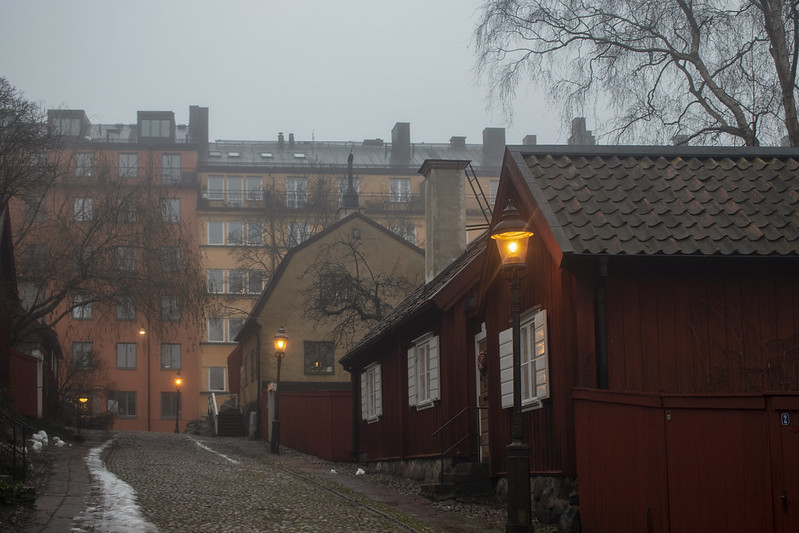
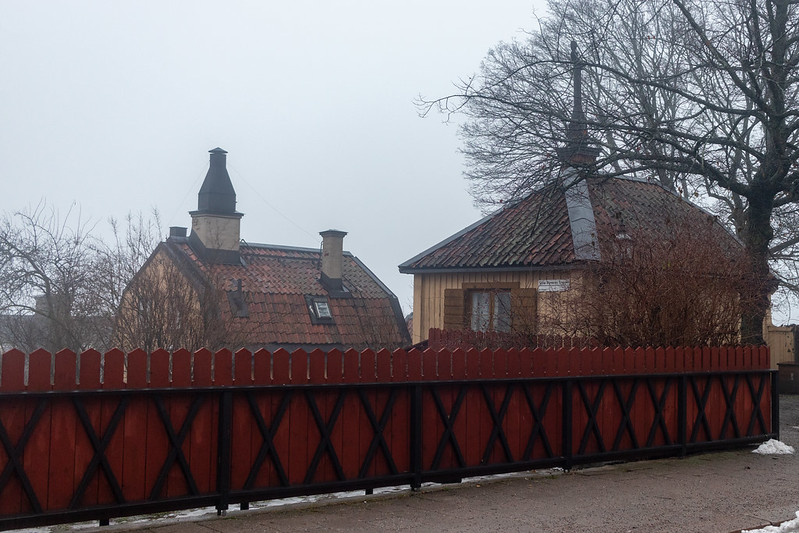
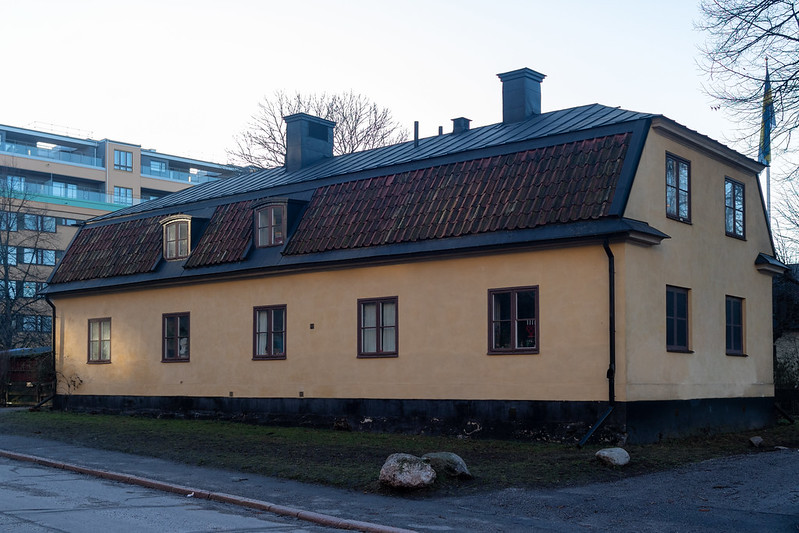
Just a short walk from the mural in yesterday's post, this is Kristinehovs Malmgård on Södermalm. Or at least the two wings. I did take a photo of the main building, but it was too messy for my taste, so I will give that view a go another day. But there is a good view at their website. Kristinehov was built as a Summerhouse back in 1790 for Georg Fredrik Diedrichson. The architect was Petrus Serén. Since around a century, this is a hub for cultural history. Operated by twenty common-interest associations. They are financed mostly by contributions from the city and a couple of other organizations. So it is a busy place with focus on dance, music and much more. There are big dining halls here where you can have your wedding party like it is 1790 all over again!

Saturday, January 14, 2023

Skeppargränd

Skeppargränd Skeppargränd N o̲ 6 Gatlykta
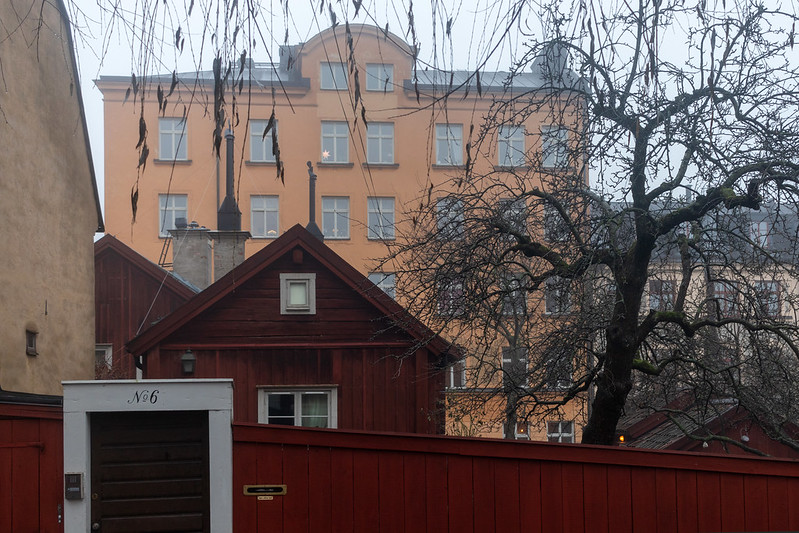
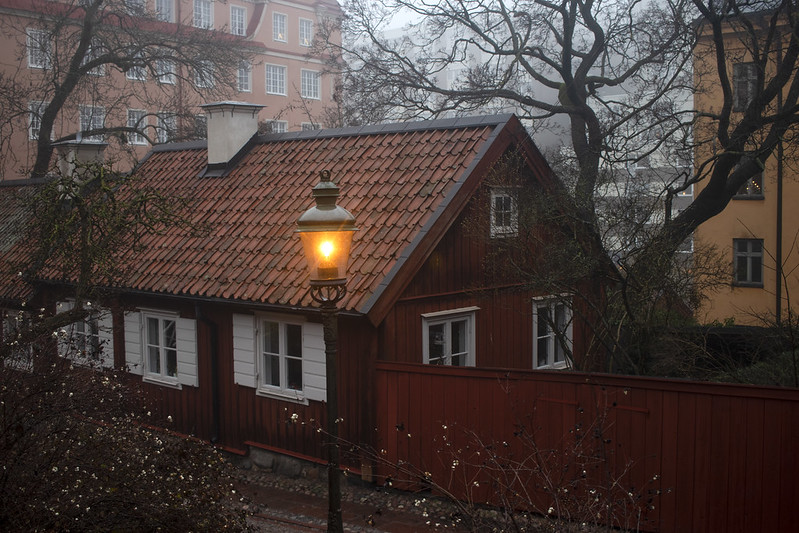
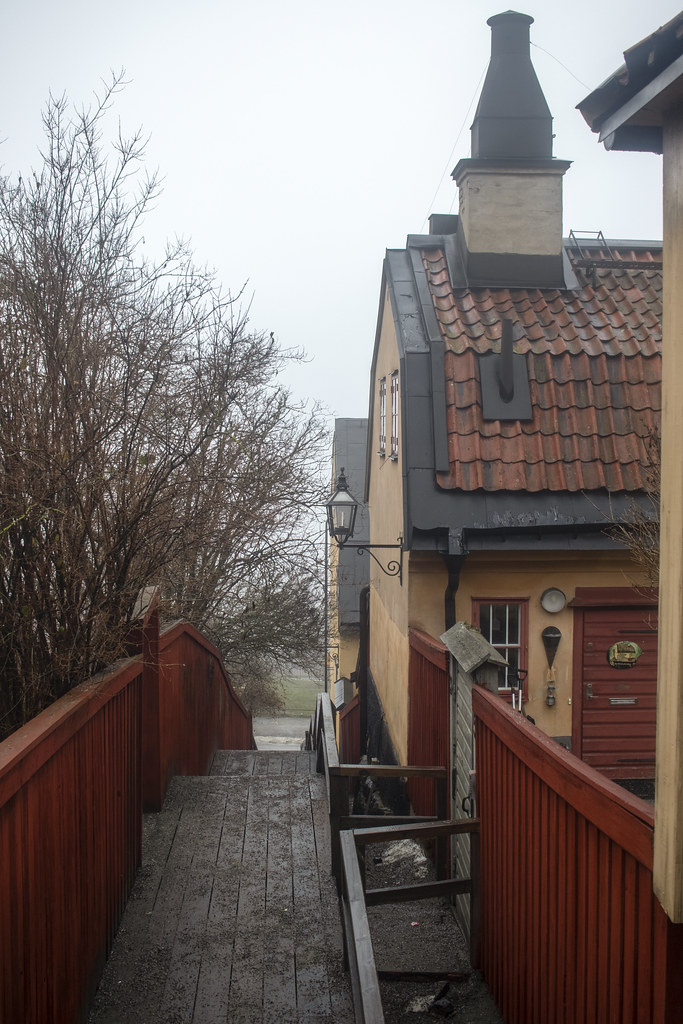
Four photos from Skeppargränd, (ship alley). A very short street, or alley, at Åsöberget. The same hill at Södermalm with that lookout point I showed you two days ago. The previous name was Sågargränd, because some of the people that lived here were sawyers. All the wooden buildings here are more than 300 years old. All listed, and today owned by the city. If you would like to live here, you can expect to queue for quite a few years. Three hundred years ago, when these buildings were new, this was a very poor part of Stockholm. Many of the people that lived here worked in the tar industry. Later, one or two artists have lived and worked here, including Carl Larsson.

Friday, January 13, 2023

Friday the 13th

Sista Styverns Trappor Stigbergsgatan
Because it is Friday the 13th, here is a fitting story. This is Stigbergsgatan on Södermalm. I took this photo on that misty day earlier in the week. You can walk down the stairs here, behind the fence. They are called Sista Styverns trappor, and will take you to Fjällgatan, a popular lookout point. An earlier name was Mikaelsgränd. Named after the executioner, Mäster Mikael. He had the job for 15 years between 1635 and 1650. Then, one night, he was drinking with a well known criminal. They argued about a debt and Mikael killed the other man, although he never confessed. And guess what, Mäster Mikael was convicted for the murder and was himself executed by his successor.

Saturday, July 02, 2022

A bit of folklore

A bit of folklore
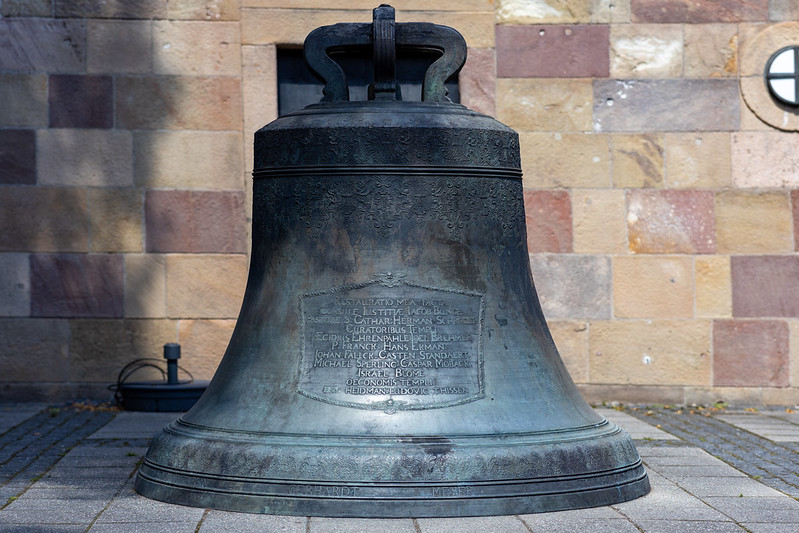
I went for a Summer promenade at Katarina on Södermalm. More photos to come, but we start with this church bell that can be found outside the Katarina church. Victims from the Stockholm Bloodbath in 1520 were burned here by Kristian Tyrann and it has been said that the place have been cursed because of that. The church, built in 1695 have been destroyed twice through fires, just like it was predicted in an old fairy tale. The last fire took place in 1990 when the tower collapsed completely. It took five years to rebuild the church.

Sunday, June 20, 2021

The Gravediggers Cottage

The Gravediggers Cottage
In October of 1832, around 1000 people at Södermalm in Stockholm died from cholera. The victims were buried at night at the Kolerakyrkogården at Skanstull. In total 3500 people died of the disease that year. Two decades later cholera killed another 2800 people here. This building from 1832 was known as the Dödgrävarboställe, the grave-diggers cottage. Today this is a little park.

Thursday, February 21, 2019

Marieberg

Marieberg Marieberg Nedre Marieberg Marieberg
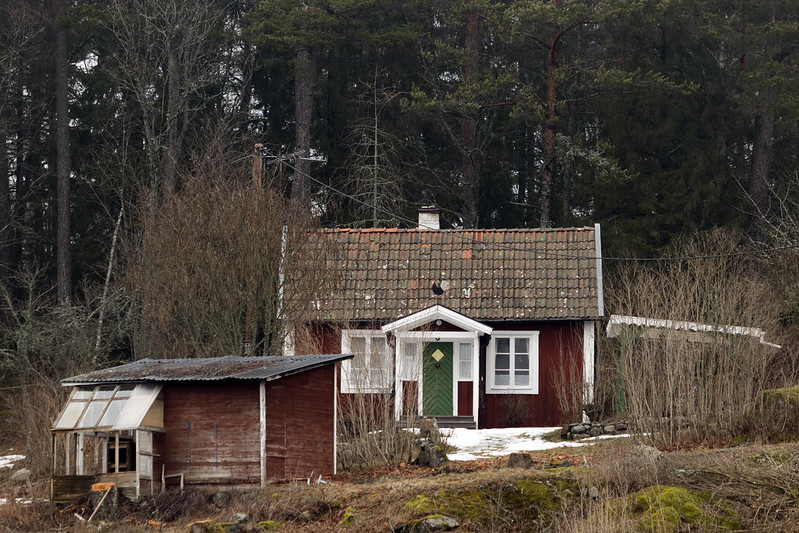
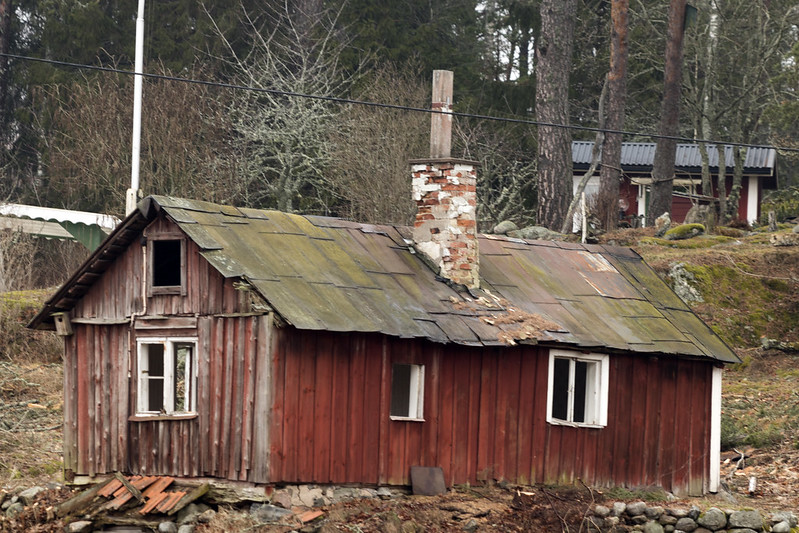
I'm guessing these old buildings at Marieberg in Fors, Västerhaninge will be gone soon. For many years the property was hidden behind a little forest. But the trees have now been cut down and as the new owner is a builder chances are that we will see something new here soon. Marieberg has a well documented history thanks to Sune Nilsson. He was born in the red cottage and his family and several generations of his family have lived here. Sune was only four years old when he moved out from Marieberg but half a century later he started researching his family history and if you understand the local lingo you can read more at haninge.org. Here and here.

Saturday, October 27, 2012

The old schoolhouse

The old schoolhouse
On a winter morning in February back in 1847, a teacher opened the green door to let the first students in to this school at Svartbäcken. 150 years after that first school day, on February 15 1997, the door opened again. That's when the school museum opened. Inside you will find a typical class room as it would have looked a century ago. This is the oldest school building in Haninge.

Thursday, October 25, 2012

The Bootleggers Place

The Bootleggers Place
Alghot Niska lived a different life. He played Olympic football for Finland in the 1912 Stockholm Olympics. He fought in the Winter War. During World war II he smuggled Jews out from Nazi-Germany. The Gestapo was always after him. During Finnish prohibition he handled illegal liquor and became a famous bootlegger. During that period he had his headquarters at this farm house in Tyresta. Police in both Finland and Sweden tried their best to catch the folk hero and he spent some time in jail in both countries. Niska died in 1954 at the age of 67. By then he was all alone in the world. He had no money, no family, and no friends.

Monday, July 16, 2012

Another Runestone Update

The Småhamra Runestone My third post about the Viking Era runestone that was found last spring in a field at Småhamra. Previous posts here and here. Since my last post the farmer Rolf Norlin, has been out ploughing again, and just as my friend Jim guessed last year when I told him about the historic find, Rolf found the missing piece of the runestone in the same field. So it is now possible to read the whole inscription, and the discussion now is if the two pieces should be put together or left like you can see here.

Monday, June 04, 2012

Soon to be just a memory

The Old Farm House View From a Hill Unrepairable Three photos from Djurgårdsgrind in Tungelsta. The land here was bought by the Johansson family a century ago. They were land-workers employed at a big estate near Ösmo in Nynäshamn. Somehow they managed to borrow enough money to buy Djurgårdsgrind. The first thing they did was to build a home, seen in the first photo. They stayed here for a number of years and also built a second home, that is the larger building on the second photo. They had a young son when they moved in here, he became a good friend to my grandfather. The young boy grew up to become a famous author. Ivar Lo-Johansson. As soon as he could, he left Tungelsta and moved to Stockholm. I have read a couple of his auto biographies where he speaks of his life here. Sadly the property will soon be gone. The elderly owners that have used Djurgårdsgrind as a summer house for the last decades never cared about any of the buildings here, as you can tell by the state of one of the barns. I heard from a friend recently that the couple had passed away and that the property was up for sale, so on a sunny day last week I took the bike over for a photo shoot. I'm guessing that any new owner will know nothing about the history here and that all the buildings will be gone in a near future. I have a few more photos it a flickr set.

Tuesday, March 27, 2012

Something for the garden

Two Vikings Made This

Something for the garden


Do you have a runic inscription from the Viking Era in your garden? I guess not. But here is one. You will find it on a hill side called Spångaberget in the old Tyresta village. Today this is part of the national park, but as there's a working farm here, a few people live in the old farm buildings. The runic inscription reads: "far(e)biarn : lit : hagua : stain : et : haulf : sun * si- : hal(t)an : hiak : runa". In English, Farbjörn had the stone made after Håulv his son, Halvdan cut the runes. The bird at the top of the hill side inscription is a wood grouse, and if you are lucky, you might see one in the forest here at the park. The wood grouse is today used as a symbol on the Haninge coat of arms. The local historical association, where I am a member has two birds on their newish iron gate.

Sunday, October 30, 2011

The Execution Rock

The Execution Rock

Before Sweden became a democracy we actually killed our citizens. Today's photo relates to a post I wrote just before Midsummer two years ago, about such an event. This glacial erratic in Jordbro has a gruesome history. Because for centuries it was used as a place of execution. It has seen many decapitations and hangings. The last person to die here was Anders Gustav Pettersson, who murdered his boss, Fredrik Jaedren, the brutal owner of the old estate Näringsberg. Many years ago before the railway, there was an old Inn near the rock, where visitors to and from Stockholm used to stay for the night. Obviously it was said that this place was haunted...

Tuesday, September 27, 2011

The Green Tunnel

Green Tunnel

One Thousand Years...

I use this old road sometimes. It is called Blåkullavägen. It dates back a long time. Just before this green tunnel you can stop and have a look at the Viking era runestone by the side of the road. The inscription reads: Sven had this stone raised after his father Rodisl. The snake on the runestone symbolise Jörmungandr. If you continue towards the horse farm at Blåkulla you can use the tunnel to get over to Ormsta and that is what I did.

Saturday, May 28, 2011

A Former Museum

A Former Museum

This little cottage at the Hammar estate in Tungelsta was built by a great-great grandparent to the current owner Charlotte. He was a man that sailed with one of the Swedish East India Company ships to India and China nearly two hundred years ago. On the first two trips he brought home many items, and to have a place to store and show them he decided to build this little museum. Sadly he died during his third expedition to Asia. After posting this photo at flickr one of my Swedish readers in the US told me that a relative of his was the captain on one of these ships. Small world.

Thursday, May 19, 2011

The Mousetrap

Råttfällan

As a member of the historical association I am sometimes asked to photograph old cottages for upcoming books. This is one such place. This property dates back to 1741. The name is a bit unusual. It is called The Mousetrap or Råttfällan in Swedish. It is located at Alby, a rural part of Haninge. The story behind the name is that there once lived a boatswain here who hated rats and he apparently made a lot of mousetraps. That same legend also says that he made traps for roe deers and elks! On my visit I had a lengthy chat with the current owner Mr. Svanäng. He is a retired farmer who has lived her for eleven years.

Friday, March 18, 2011

Summer vs. Winter

Winter in Sweden

Håkanstorp

This cottage in Tungelsta is known as Håkanstorp, or Håkstorp. It dates back to 1690. It is located on a hill near the Haga farm, that I showed you in a slideshow last summer. Håkstorp is mentioned in one of Ivar Lo Johansson's auto-biographies. The famous author lived down the road at Djurgårdsgrind when he was a school boy. One day he visits the cottage and buys his first ever rifle, from the blacksmith Anders Peter Andersson, that lived here 90 years ago. In the book Johansson describes how he spends the night at Lake Tornberga hoping to shoot something. In the end he kills a grouse.

Saturday, January 29, 2011

A long long time ago...


...three brothers lived at a farm at Tuna in Tungelsta. This is the Skogs Ekeby runestone in Tungelsta. The inscription reads: Vigils and Gerhjälm had this stone made after their brother Gudbjörn -björn cut the stone. The road here, Skogsekebyvägen, dates back to the Viking Age, as does of course the runestone itself. The three brothers lived at a farm at Tuna one thousand years ago. Something I always think about whenever I walk by here. Over the centuries the runestone has been moved around. The original position was probably on a field nearby Tuna. A little over a century ago in 1886 the runestone was found at a bridge where it had been used as foundation! The reason for that is most likely that the people who lived here a few hundred years after the inscription was made didnt understand the runic alphabet.

Monday, November 30, 2009

The Homestead Society

The Chairman

Christmas Window

Erikslund

Three photos from the Christmas Market that the homestead society arranged in Västerhaninge yesterday. On the top photo you can see Hans Widfond, the chairman of the society, Haninge Hembygdsgille, standing outside the Erikslunds cottage. A building that the society successfully has moved from Ramsdalen near Tyresta, to it's new location at the old courthouse in Västerhaninge that these days serves as the society's headquarters. The little cottage is now all that remains from what once was a small farm (3 ha), in rural Haninge. The farm was bought in 1870 by Per Erik Pehrsson and his wife Anna Sofia Forssberg. It was a tough life working as a farmer, and the family also operated a small laundry business. Their grandson Yngve Pettersson was interviewed by the historian and author Henry Hall from the society many years ago, and if you understand Swedish you can read more if you download these two PDF files from Haninge.org. On my visit yesterday I looked through a photo album with around 100 photos from Erikslund. Both old ones and some recent pictures from the work of tearing down and reassembling the building.

Thursday, August 06, 2009

American Timber

Fridhem

American Timber

IMG_3278

This is Fridhem. A property at Lida. It was built back in 1922. The builder was my maternal grandfather, Oskar Andersson, who never lived here himself. Fridhem has an interesting story. When the rail-road to Stockholm opened a little over a century ago, many new businesses came with it. In Tungelsta that meant a number of new laundries. Fridhem was one of them. Here is the interesting part. Back in the 1920s cars imported from North America were transported in wooden containers. Anyone who wanted could get the timber from the containers for free, at the harbour in Stockholm, as long as they paid for the transportation. And all the buildings seen here (except for the modern garage), was built with that wood. If you look closely on the second photo that I took inside the big laundry barn you can still read what was written on the wooden containers. On the third photo you can see the wringer building. The laundry closed many years ago. Since the 1930s someone from the Björklund family has always lived here, and once every year, Karl Gustaf Björklund usually has a big yard sale here. Earlier this summer I visited what turned out to be the last sale. Because just a few weeks ago Karl Gustaf, who is in his eighties, moved out after selling the property to a developer. So it is very likely that all the buildings, except for the house soon will be gone. And with it a part of Tungelsta history. I have talked to a few members of the historical association and hopefully they can perhaps save one of the buildings. If not I have at least been there on two occasions lately to document it all.

Wednesday, July 08, 2009

A Murder Story

Vanishing Into The Green

The Estate

I'm reading a novel about a murder at the moment. It's a true story. A man was murdered by three of his employees. It happened at Näringberg a very long time ago. It's an old estate near the Hårsfjärden Bay, with a long and dramatic history. In 1719 the Russians attacked, and the estate was burned down, only to be rebuilt on the same spot a few years later. The mansion is situated on a small hill, from where you had a good view over the surrounding landscape and the bay. The murder took place on a summer night back in 1853. On the day I started reading the book I decided to see the place for myself. So I took a bike ride down to Näringsberg, which today is in the hand of the military. Luckily for me there was no military activity on this day. They use it as a training facility, and there are warning signs all over the place not to pick up any ammunition you might find! I passed the rusty old gates without any problems and continued down the impressive tree lined avenue leading up to the house. The place was empty so for one hour I walked around looking at all the buildings while taking a few photos. The murder victim, Hugo Jaedren, was a very brutal man and he probably got what he deserved. Arriving home one night he had to stop his horse and wagon as the gates to his estate were closed. And before he knew it he was attacked and beaten to death. His helper, a young boy, managed to sound the alarm, but when help arrived, the murderers were nowhere to be seen. The police was called in. Three men were soon arrested, and they all later confessed to the murder during the following trial. One of them was sentenced to death, and he was the last person to be executed at the execution rock in Jordbro. For many years the buildings at Näringsberg stood empty and the place was slowly decaying. But luckily the authors to the book, Bo and Anita Stjernström has managed to raise the necessary funds from the Swedish Fortification Agency to restore the place.